Single-Photon Avalanche Diode is one of those terms that can make a dToF LiDAR module sound automatically superior before a buyer has checked whether the real scene, optical packaging, and data path are actually under control. That is the wrong order. A SPAD-based module deserves deeper evaluation only after the team can connect detector-level sensitivity claims to repeatable depth evidence in its own test conditions.
This guide is written for technical buyers, robotics integration leads, and product engineers who need to understand what a single-photon avalanche diode changes inside a compact dToF LiDAR module, and what still has to be proven before sample approval.
| Quick answer | Use a SPAD-based dToF module only after you verify scene fit, optical packaging, weak-frame replay, and whether the module's sensitivity claim still holds under your real stand-off distance and ambient-light conditions. |
|---|---|
| Best fit | Buyers comparing compact depth modules for robotics, UAV, and embedded inspection programs where low signal levels, reflective targets, and practical integration risk matter. |
| Decision rule | If the supplier can explain SPAD physics but cannot show replayable evidence from your target geometry, materials, and host workflow, the module is not shortlist-ready yet. |
What a Single-Photon Avalanche Diode changes in a dToF module
Hamamatsu's current SPAD material is useful because it frames the detector honestly: a SPAD array is a photon-counting technology used where very low light levels matter, and LiDAR is one of the intended application families. That context matters, but it is still only the start of the buying conversation. A buyer is not purchasing a detector in isolation. The buyer is purchasing a module that has to survive geometry limits, ambient light, cover-glass choices, timing behavior, and host-side data handling.
The 2025 paper Performance Bounds of Ranging Precision in SPAD-Based dToF LiDAR adds the practical warning many shortlist discussions skip. It shows that dead time and pile-up can degrade ranging precision, and that operating point choices such as optical flux and timing resolution affect the result. In plain buyer language, that means the phrase "single-photon" should not be treated as a shortcut for "always more accurate." It means the module deserves careful validation under the exact scene and signal conditions you care about.
ST's current Time-of-Flight guidance also keeps the conversation grounded in embedded reality. The company's ToF pages position compact depth sensing in robotics, industrial, and mobile use cases where packaging, ambient conditions, and integration discipline matter. If you need a broader shortlist lens first, read SPAD LiDAR for low-light robotics and inspection. This article goes narrower. It focuses on how a Single-Photon Avalanche Diode claim should be checked before you trust sensitivity language in a compact dToF module.
Decision chart for buyer-side verification
| Verification area | What to verify | Why it matters | Reject if |
|---|---|---|---|
| Detector claim | Whether the supplier can connect SPAD architecture to a measurable scene result instead of leaving it at acronym level | Buyers need evidence, not just component vocabulary | The discussion stops at "single-photon sensitivity" with no replayable depth output |
| Operating-point realism | Stand-off distance, target reflectivity, ambient-light level, and weak-return cases | Dead time, pile-up, and flux-dependent behavior are system-level issues | The evaluation uses only easy targets or one clean lighting condition |
| Optical packaging | Cover glass, aperture cleanliness, crosstalk risk, and protective-window assumptions | A good detector can still underperform when the optics stack is weak | No one can describe the protective-window choice or how it was validated |
| Data usefulness | Saved weak frames, confidence review path, and whether misses can be reproduced | Shortlisting becomes defensible only when the weak cases are reviewable | The evidence is a one-time demo and not a replayable dataset |
| Integration path | UART, UVC, or UDP route to the first stable dataset on the team's real host platform | Detector quality is wasted if the capture path stalls the project | The module lacks a practical first proof route on your intended host stack |
Exact featured-product parameters to screen
The current Featured product for this workflow is the LiDAR Drone Module – MRP-LD1 Solid-State dToF Sensor. The article uses that module as a factual baseline because its published specification already states SPAD (Single-Photon Avalanche Diode) as the scanning principle, and the rest of the module facts are explicit enough to build a disciplined evaluation sheet.
| Parameter | Published value | Buyer implication |
|---|---|---|
| Ranging principle | dTOF | Evaluate timing-driven depth behavior, not only a 2D image pipeline. |
| Scanning principle | SPAD (Single-Photon Avalanche Diode) | Treat sensitivity claims as a reason to test more carefully, not less. |
| Emitter | 940nm VCSEL | Optical-window choice and ambient-light discipline belong in the proof plan. |
| Laser safety | Class 1 (FDA Recognized Eye-Safe) | Useful for screening, while the final system still needs its own safety review. |
| Range | Indoor 0.5-25m; outdoor 0.2-8m | Judge the module against the real clearance band you need, not the maximum headline alone. |
| Ambient-light resistance | 80Klux | Bright-spill and mixed-light checks should still be part of the acceptance run. |
| Accuracy | 0.2-1m <= +/-3cm; 1-5m <= +/-5cm; 5-8m <= +/-10cm; 8-15m <= +/-20cm | Translate each band into your actual decision threshold before you compare suppliers. |
| FoV | 60 degrees (H) x 45 degrees (V) | Map that cone onto the real scene geometry before accepting a sample. |
| Resolution / frame rate | 40 x 30 at 10fps | Enough for many compact evaluation tasks if the team defines what counts as usable evidence. |
| Interfaces | UART / UVC / UDP | Pick the fastest route to a replayable dataset, then optimize later. |
| Software support | Windows / ARM / Linux / Android | Useful when the bench logger and final host are different platforms. |
| Power / weight | 5V, 1.2W, 8g | Relevant for compact robot masts, embedded rigs, and lightweight UAV payload planning. |
Verification workflow before sample approval
1. Start with the weakest real scene, not the cleanest demo
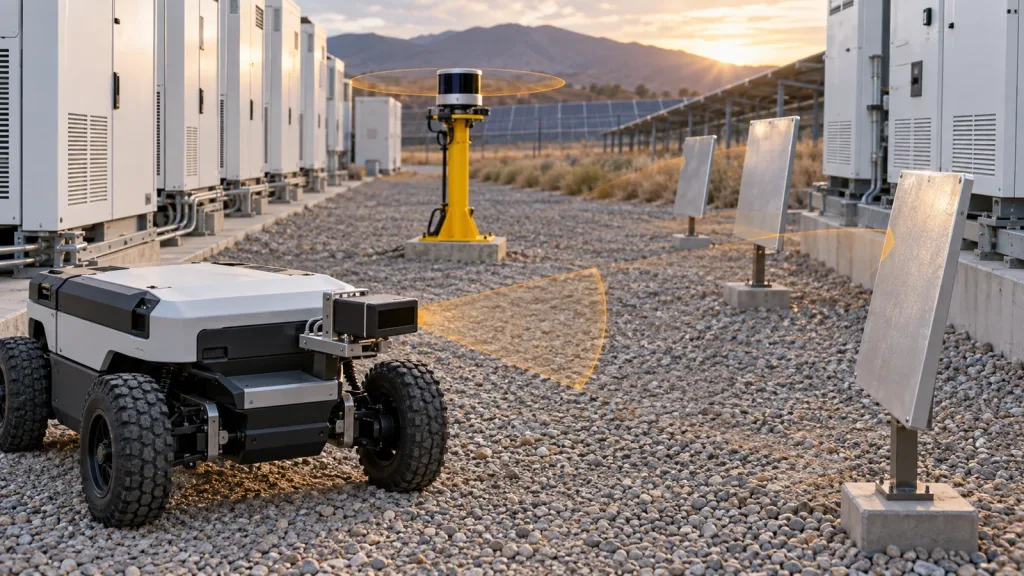
Write down the real stand-off distance, target materials, and ambient-light condition that are most likely to expose weak returns. If the module will face reflective paint, brushed metal, or mixed indoor-outdoor spill, include those from the first test run.
2. Turn the Single-Photon Avalanche Diode claim into a proof sheet
A supplier should be able to explain what the SPAD detector changes, but your approval sheet should ask different questions: were weak returns saved, was the geometry still interpretable, and did the module maintain usable scene coverage when conditions became less ideal? That is the bridge between detector theory and buying confidence.
3. Check the optical stack before blaming the detector
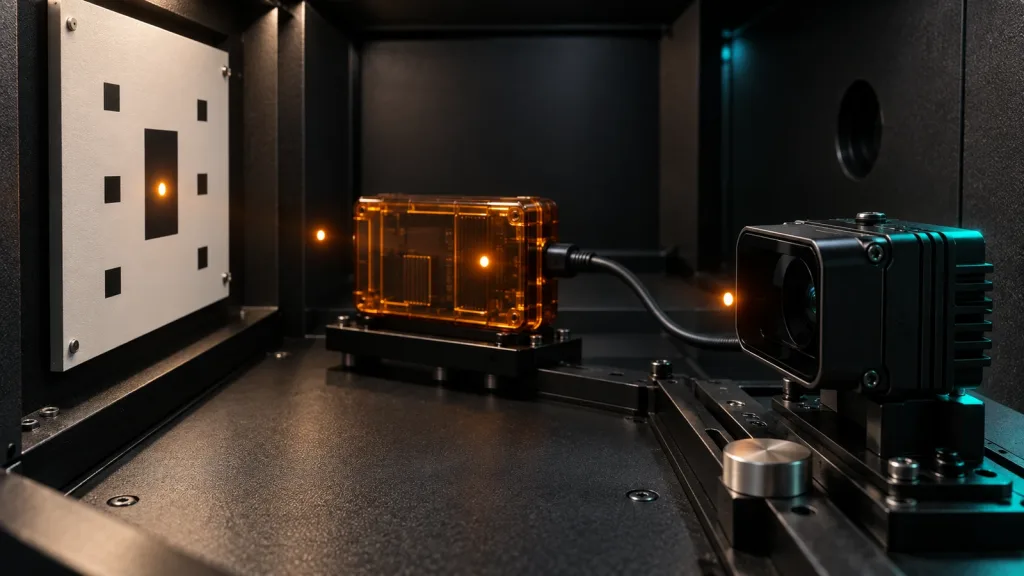
ST's current cover-glass guidance is a useful reminder that packaging quality matters. Protective windows, contamination, and crosstalk can distort results long before you reach a conclusion about the detector itself. If a proof run fails, the next question should often be optical packaging discipline, not "SPAD or not SPAD."
4. Get to replayable data as fast as possible
The MRP-LD1 supports UART, UVC, and UDP, so the best first interface is usually the one that gets the team to a saved dataset fastest. If you need a practical interface refresher, use UART, UVC, or UDP, the documentation hub, and the sample datasets before you widen the pilot.
5. Freeze pass/fail evidence before the pilot expands
Save the weak frames, the lighting notes, the host path, and the scene setup. If the team cannot explain what failed and why, then the module has not earned the next evaluation cycle yet.
Interface, data, and integration section
Detector-level sensitivity matters only when the rest of the module turns it into evidence your team can use. That means integration planning belongs in the buyer conversation. If the first test host is Linux, your first proof path should work there. If the team wants quick visual review, a UVC route may reduce friction. If embedded parsing matters sooner, UART or UDP may be the more relevant starting point. The key is not to romanticize the detector and postpone the data path.
| Integration topic | Questions to answer before approval |
|---|---|
| Host environment | Will the first proof run happen on Windows, Linux, ARM, or a mixed bench-to-embedded workflow? |
| Output form | Will the review depend on depth frames, point-cloud-like output, or both? |
| Weak-frame replay | Can the team save and compare the ambiguous frames rather than relying on live viewing alone? |
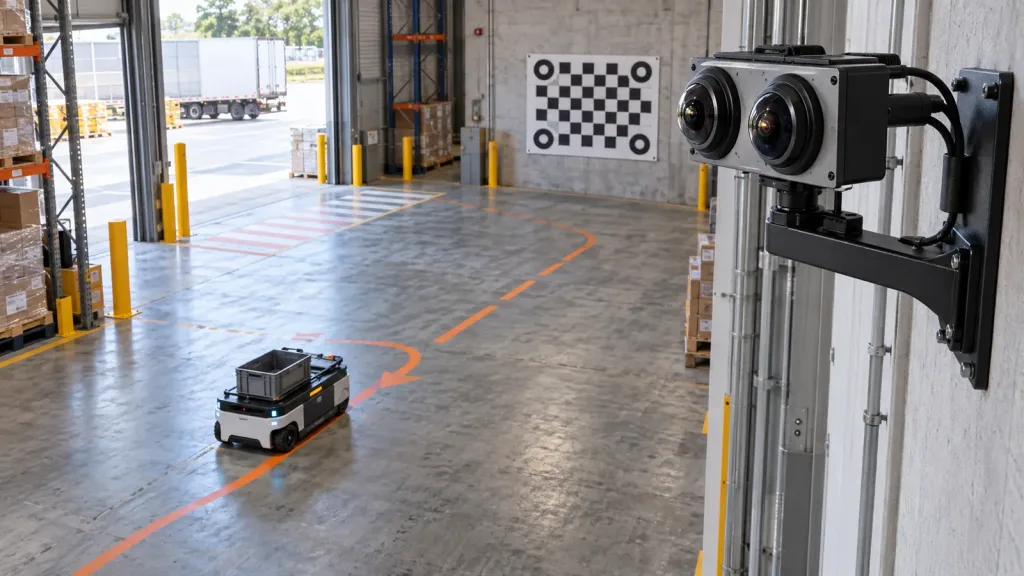
| Scene-geometry mapping | Does the FoV capture the real hazard or inspection zone, or only the easy center of the scene? |
| Escalation path | If a run fails, can the team tell whether the next step belongs to optics, mechanics, host parsing, or vendor support? |
If the dataset needs a more formal review step, use how to evaluate a LiDAR point cloud dataset before integration, common LiDAR integration issues and how to diagnose them, and the newer 940nm LiDAR validation workflow to keep the discussion tied to evidence rather than assumption.
Realistic application case
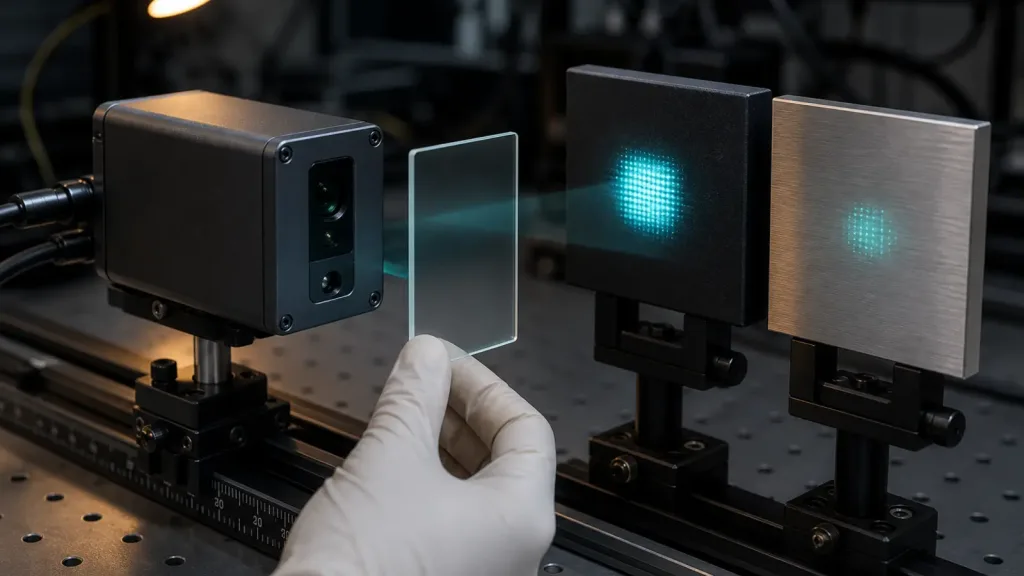
Consider a compact robotics team that wants to approve a small dToF module for a pilot build. The sensor must judge both a matte fixture block and a brushed-metal target at close range, and the team expects to use the same module family later in a lightweight UAV payload or a small embedded inspection rig. The term Single-Photon Avalanche Diode has already appeared in the supplier conversation, so the buyers assume the module should be especially good at weak returns.
- Mount the module at the real stand-off distance rather than on a generic bench position.
- Log one run with the matte target, one with the reflective target, and one with both objects in the same frame.
- Repeat the sequence after inserting the intended protective cover glass or front window.
- Save the weak frames and note whether the scene remained interpretable enough for the real decision the product must make.
- Approve the next sample stage only if the team can explain detector claim, optical stack, and data-path behavior together.
This case is useful because it prevents two common failures: approving a module from one clean target, and blaming the detector for problems that really come from packaging or weak replay discipline.
Common mistakes
- Treating
SPADas proof of performance instead of a reason to define a stricter test. - Ignoring dead time and pile-up implications when interpreting sensitivity language.
- Skipping cover-glass or protective-window checks until after the sample looks weak.
- Running only matte targets and assuming reflective surfaces will behave similarly later.
- Choosing an interface path without checking which one gets to replayable evidence fastest.
- Approving the module from a live demo with no saved weak-frame examples.
RFQ and evaluation checklist
| Checklist item | Why it belongs in the approval sheet |
|---|---|
| Exact stand-off distance and target set | Keeps the evaluation tied to the real scene rather than to a generic demo board. |
| Reflective and matte target examples | Forces the test to expose weak-return behavior early. |
| Protective-window or cover-glass note | Separates detector issues from optical-packaging issues. |
| Preferred first interface | Reduces time to the first stable, replayable dataset. |
| Saved weak-frame evidence | Makes the pass/fail decision auditable across teams. |
| Host-platform plan | Prevents a good module from stalling on the wrong capture path. |
| Escalation owner | Clarifies who handles optics, mechanics, firmware, or vendor follow-up after a weak result. |
Use the acronym as a filter, not as the decision
A compact SPAD-based dToF module can be a strong fit when the team validates the real scene, the optical stack, and the replay workflow instead of buying the detector story on faith. The faster path to a good decision is to define the weak case first, capture it, and compare it against the real product requirement.
- Start from the Featured product, your stand-off distance, and the weakest target pair you expect in production.
- Use the documentation, datasets, and interface guidance to turn the first proof run into evidence instead of impressions.
Purpleriver, founded in 2015, develops solid-state dToF LiDAR technology and provides product, documentation, and dataset resources that can support a structured evaluation workflow around the MRP-LD1 module.
Contact Purpleriver with your target geometry, materials, and host path so the next conversation starts from real evaluation criteria.