OEM LiDAR Supplier: The Data-Handoff Checklist Before You Approve a Sample
Choosing an OEM LiDAR supplier is not finished when a depth image looks convincing on the supplier's laptop. For a UAV, robot, or inspection prototype, the practical question is whether your host can receive, identify, timestamp, parse, and evaluate the delivered data under a documented test condition. This guide turns that handoff into a short, reviewable acceptance checklist.
Quick answer
Approve a compact dToF sample only after the supplier can provide three things together: the exact module configuration and interface choice, a host-side data contract with a repeatable capture, and measurement evidence that states the target, distance, environment, and uncertainty context. A demonstration proves the module powered up; the evidence pack helps your team decide whether it can integrate the module.
Start the OEM LiDAR supplier review with the data-handoff decision
Write down the first host that must consume data: a flight controller, companion computer, PC, or embedded processor. Then select the evidence you need from the supplier. This is more useful than asking for a generic "SDK" because it makes the receiving system, interface, and proof of parsing explicit. For background, see Purpleriver's LiDAR sensor data-contract guidance for flight-controller integration.
| Buyer situation | Ask the supplier to provide | Internal acceptance question |
|---|---|---|
| Early bench evaluation | Module configuration, power requirement, interface selection, sample payload, and a capture procedure | Can our designated host reproduce the supplier's capture without changing unknown settings? |
| Interface selection | UART, UVC, or UDP framing/format notes plus a known-good test capture | Can our parser identify complete frames and flag malformed or missing data? |
| Depth evaluation | Target description, distance, ambient condition, result, and stated measurement context | What quantity was measured, and what limitations must our design review retain? |
| Pilot integration | Mounting assumptions, power budget, host software prerequisites, and regression-capture procedure | Can the engineering team repeat the test after a firmware, cable, or host change? |
The result should be a one-page handoff record that names an owner on both sides. It is not a promise that every application will behave the same way; it is the starting point for a controlled evaluation.
Request a three-part evidence pack, not a collection of marketing files
1. Physical and configuration evidence
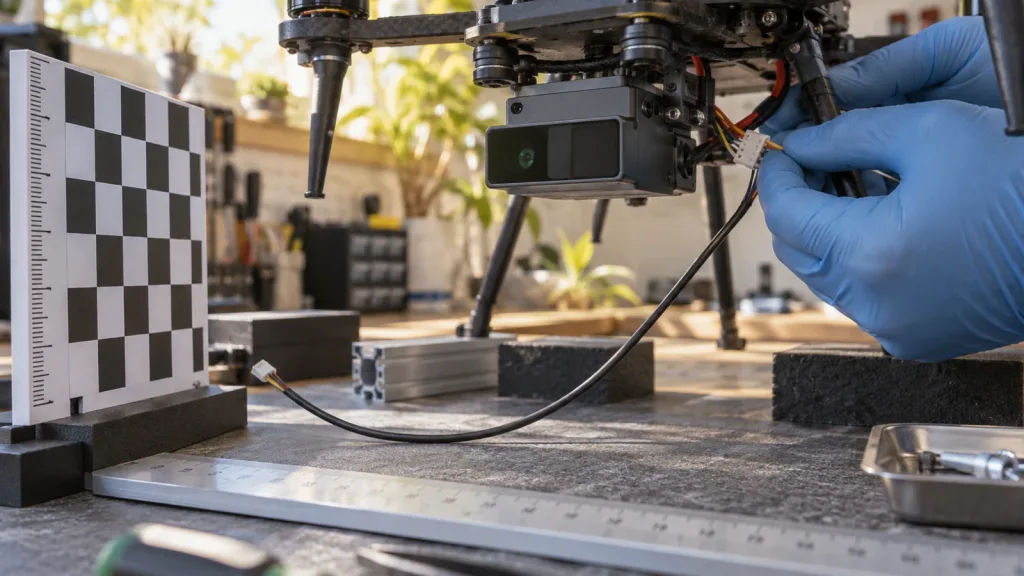
Record the exact module, interface, host, power arrangement, mounting orientation, and software/firmware identifiers used in the capture. These details make later comparisons possible. If the intended project is a compact UAV, link this record to the payload and power review rather than assuming a successful desktop test transfers unchanged.
2. Interface and data evidence
Ask for a raw or losslessly captured example, its byte/field description, units, coordinate conventions where applicable, and a minimal parsing example. The USB Implementers Forum's USB Video Class document set is a useful reference point when a supplier offers UVC: the buyer still needs the module's negotiated format and its product-specific payload interpretation.
For UDP, do not infer reliability from the fact that packets arrive in a lab capture. IETF RFC 768 describes UDP as a minimal datagram protocol and notes that ordered, reliable delivery and duplicate protection are not guaranteed by UDP itself. Ask what the host should do when a frame is incomplete, late, duplicated, or absent.
3. Measurement evidence
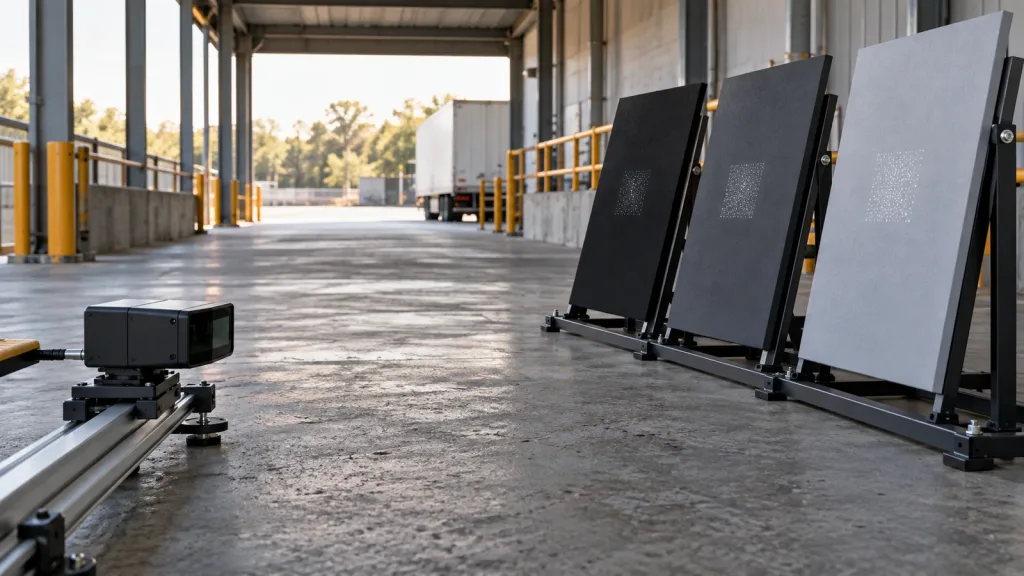
An accuracy line is only interpretable with the measurement context. Request the measurand, target material or reflectivity if available, range, environmental condition, repetitions, calculation method, and the way uncertainty is stated. NIST explains that a measurement result needs a defined quantity and context for uncertainty to be meaningful; its measurement-uncertainty guidance is a sound reference for structuring that record. Treat a supplier specification and your own integration result as separate evidence sets.
Featured product facts: MRP-LD1 Drone LiDAR Sensor
Purpleriver's Featured product is the MRP-LD1 Drone LiDAR Sensor. The table below reproduces product-listed parameters for evaluation planning; it does not replace host-side validation.
| Product-listed parameter | MRP-LD1 value | Handoff implication |
|---|---|---|
| Ranging principle / scanning principle | dToF / SPAD (Single-Photon Avalanche Diode) | Request the depth/point-cloud representation used by the chosen host interface. |
| Range | 0.5–25 m indoor; 0.2–8 m outdoor | Write the intended target distances into the evaluation plan. |
| Accuracy | 0.2–1 m ≤±3 cm; 1–5 m ≤±5 cm; 5–8 m ≤±10 cm; 8–15 m ≤±20 cm | Preserve the test distance and conditions when comparing results. |
| Field of view / resolution / frame rate | 60° (H) × 45° (V); 40 × 30; 10 fps | Check coverage and update-rate fit against the host's intended control or inspection workflow. |
| Interfaces | UART, UVC, UDP | Select one first-path interface and document the parser/receiver acceptance test. |
| Power / weight | 5 V; 1.2 W; 8 g | Include both in the payload and power-budget review. |
| Other listed parameters | 940 nm VCSEL; Class 1 (FDA Recognized Eye-Safe); −20 to 60 ℃ operating temperature; Windows/ARM/Linux/Android support | Confirm the sample configuration and project environment with the supplier before design release. |
Plan UART, UVC, and UDP as different integration paths
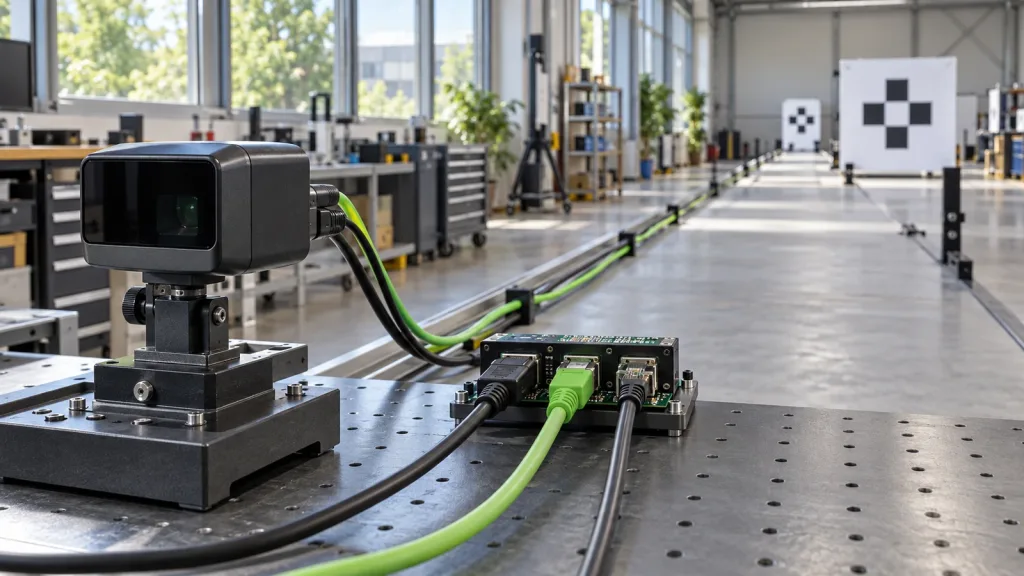
The MRP-LD1 lists UART, UVC, and UDP interfaces. The right choice depends on the first host and the evidence your team can inspect.
- UART: request serial settings, framing, byte order, checks, and a raw capture. Define how your test tool identifies a valid message after a reconnect or corrupted byte sequence.
- UVC: request the selected format, resolution, host procedure, and a sample capture. Confirm that the intended host can enumerate the device and that your software understands the delivered content, not merely that an operating system recognizes a camera-class device.
- UDP: request the sender/receiver addressing assumptions, packet/frame relationship, payload length, timing expectation, and loss-handling behavior. Capture with the intended network path—not only a direct bench cable—before calling the path ready.
For an interface comparison grounded in the site documentation, read UART, UVC, or UDP: choosing the right LiDAR interface. If an initial data stream is visible but inconsistent, use the LiDAR integration diagnosis guide to structure the fault record before changing multiple variables at once.
Realistic application case: approving one data path for a compact UAV prototype
Consider a prototype team evaluating a compact dToF module for near-field terrain awareness. The team does not begin by claiming an obstacle-avoidance outcome. Instead, it chooses a companion-computer host and one interface, mounts the module in the proposed orientation, and records a repeatable stationary-target capture at planned distances. It stores the raw capture, parser version, power arrangement, and target notes beside the results. The team then changes one element—such as the cable route, host software, or mounting position—and repeats the same capture. That sequence can reveal a handoff issue before the project treats the data as an input to a higher-level function.
For a broader product-evaluation sequence, see the compact dToF LiDAR evaluation workflow. This case is an engineering example, not a claimed customer deployment or performance result.
Common mistakes when reviewing an OEM LiDAR supplier
- Accepting a supplier screen recording instead of a capture your own designated host can parse.
- Comparing depth results without recording target, distance, configuration, and environment.
- Calling a UVC device integration-ready because it enumerates, before confirming the selected payload and application parser.
- Treating UDP packet arrival as proof that every application frame is complete and usable.
- Mixing product-listed specifications, lab observations, and system-level requirements in one undocumented claim.
- Changing power, cabling, firmware, and parser settings together, then being unable to isolate the cause of a difference.
RFQ and evaluation checklist
| Before asking for a sample | Before accepting a data capture | Before a pilot decision |
|---|---|---|
| State the host, application geometry, target range, and preferred first interface. | Confirm module configuration, capture method, data-field meaning, units, and parser version. | Repeat the capture on the intended host and retain the result with its test context. |
| Ask for the current datasheet, interface notes, and sample data. | Record target, distance, environment, power arrangement, and any data loss or invalid frames. | Review payload, power, environment, interface behavior, and outstanding risks with the engineering owner. |
| Assign a named supplier and buyer owner for technical questions. | Keep product specifications separate from observed results. | Decide whether the evidence is sufficient for the next stage—not whether a demonstration was attractive. |
Turn the supplier conversation into an evaluation record
Bring your intended host, interface choice, target range, and capture requirements to the first technical discussion. Then use Purpleriver's documentation resources and the MRP-LD1 product page to align the requested evidence with the module you are evaluating.