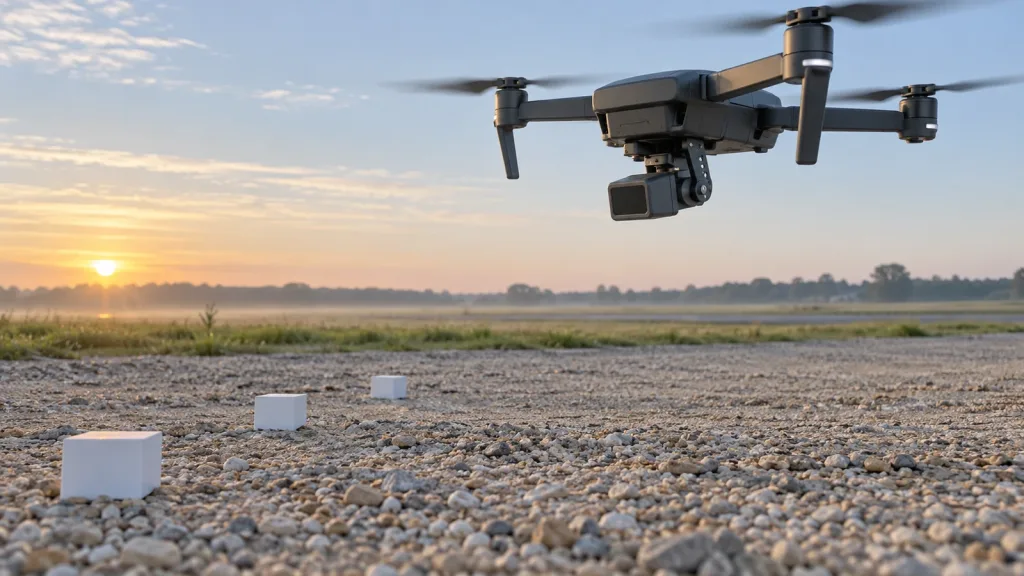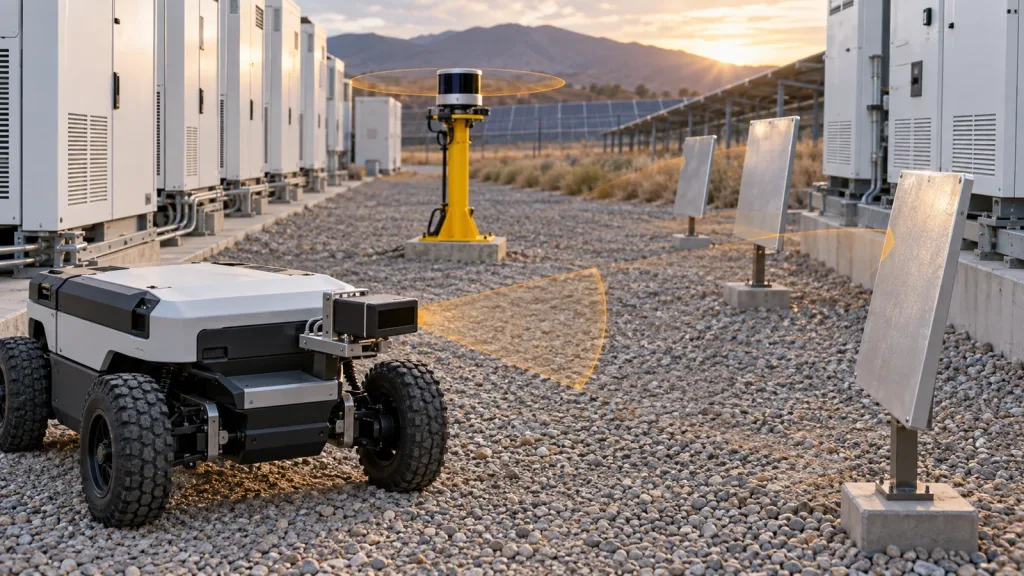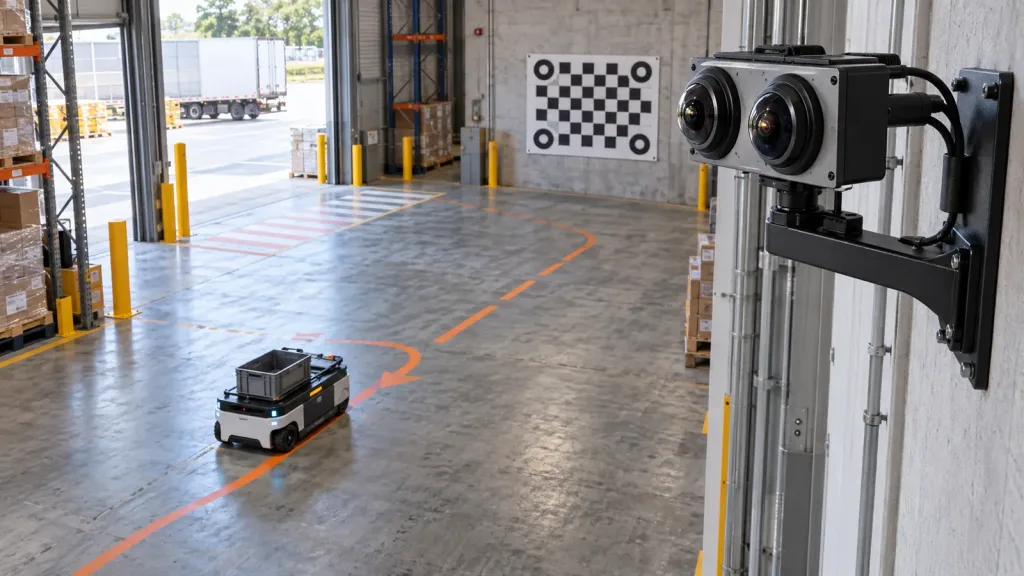
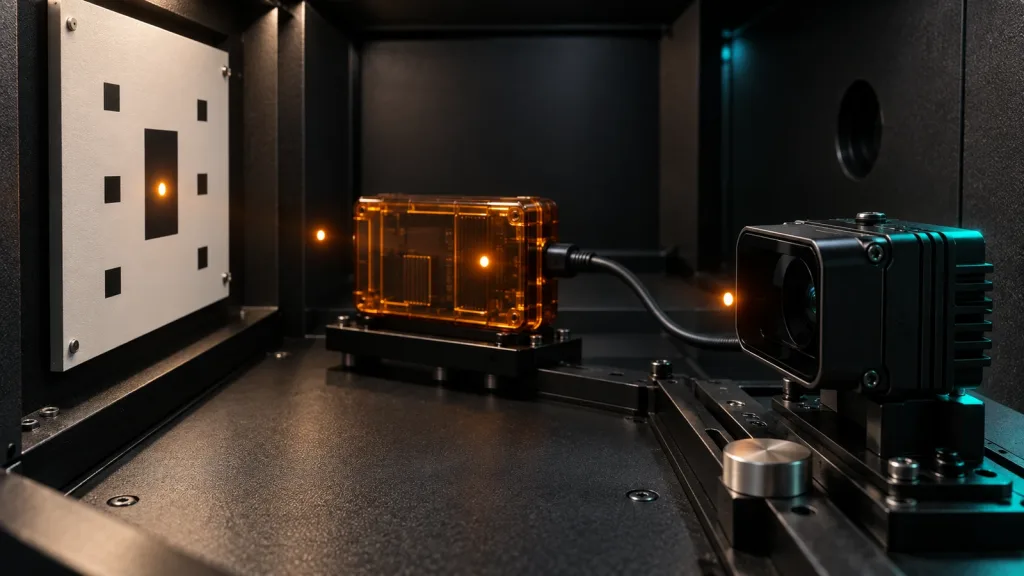
dToF LiDAR China manufacturer is a commercial search, but the useful buying decision is not “which factory looks best?” It is whether a candidate can supply a versioned, replayable evidence bundle that lets your team inspect the same sample data, test conditions, and interface assumptions before a pilot build.
Quick answer
Ask every candidate to respond to one scenario manifest, then compare the resulting raw captures, firmware and configuration identifiers, parsing notes, and exception log. Use that buyer-owned record to decide whether a sample deserves the next test stage. It is more defensible than comparing a single polished video, a headline range figure, or an unsupported compatibility claim.
Build a replay audit before requesting a sample
A manufacturer evaluation becomes difficult when each supplier chooses its own target, lighting, distance, display mode, and summary format. A replay audit changes the unit of comparison: instead of accepting a conclusion, you ask for the minimum material needed for your team to reproduce the review of a bounded test.
Start with a one-page manifest that names the intended application boundary, target material, distance positions, ambient condition, mounting orientation, output mode, host capture method, and acceptance question. Do not turn it into a claim that every dToF unit will meet a universal performance level. Its purpose is to make differences visible and traceable.
For context, recent research on SPAD-based dToF LiDAR examines how factors such as detector dead time, optical photon flux, pulse width, and ToF quantization can affect ranging precision. That is a reason to preserve test conditions and raw evidence—not a specification for any particular module. Read the primary dToF-ranging study.
dToF LiDAR China manufacturer: compare evidence before price
The phrase “China manufacturer” does not establish capability, process maturity, or regulatory status. Treat geography as a sourcing parameter and evaluate the same evidence from every candidate. The decision chart below keeps a buyer from confusing an attractive sample presentation with a repeatable integration path.
| Evidence item | Buyer question | Useful response | Not enough on its own |
|---|---|---|---|
| Scenario manifest | What exactly was tested? | Named target, distances, illumination description, orientation, capture date, and sample identifier. | A demonstration with no conditions or sample identity. |
| Raw-output bundle | Can our engineer inspect the result? | Original capture plus a brief field map and the tool or command used to record it. | A screenshot, edited point-cloud video, or a rendered color scale only. |
| Configuration trail | Which build produced the capture? | Module revision, firmware identifier, output mode, host software version, and changed settings. | A claim that settings are “default” without a record. |
| Exception record | What did not behave as expected? | Known invalid frames, dropped packets, target conditions, and the next diagnostic step. | A blanket “no issues” statement. |
| Change-control response | How will we recognize a changed build? | A proposed revision label and a re-test trigger for the buyer’s pilot. | A promise that nothing will ever change. |
This is a selection framework, not an audit certification. It complements a module evaluation-sample checklist and the site’s earlier quote-ready supplier evidence pack by concentrating specifically on replayable data and configuration traceability.
Write the scenario manifest your engineering team can replay
Use language that can be answered without guessing. A compact manifest might contain the following fields:
- Decision question: for example, whether the proposed output can be captured and interpreted by the intended host in a controlled bench setup.
- Physical scene: target material and approximate geometry, distance positions, mounting orientation, and a plain-language ambient-light description.
- Data contract: requested interface, output representation, timestamp expectation, file naming, and a contact responsible for field definitions.
- Configuration record: sample identity, firmware/build identifier, host OS, host software, and every setting changed during capture.
- Review rule: the question your team will answer after replaying the files, plus the condition that sends the sample to another test rather than to approval.
Keep a separate “unknown” column. A missing firmware identifier, unclear target condition, or undocumented field is an unresolved item—not evidence of success or failure. This preserves engineering time when candidates are compared weeks apart.
Keep exported MRP-LD1 facts separate from pilot validation
Purpleriver’s current Featured product is the MRP-LD1 Drone LiDAR Sensor. The table below repeats only its exported product fields. A buyer must still validate installation, host parsing, data use, and application behavior in the intended system.
| Exported field | MRP-LD1 listing | How to use it in the audit |
|---|---|---|
| Technology | SPAD dToF; 940 nm VCSEL | Record the advertised sensing approach; do not infer a system-level outcome from it. |
| Ranging listing | 0.5–25 m indoors; 0.2–8 m outdoors | Put the proposed scene and distance positions in the manifest rather than treating the listing as a pass result. |
| Field of view and output | 60° × 45° FOV; 40 × 30 output; 10 fps | Ask which output was captured and how the field of view was mounted relative to the test scene. |
| Interfaces | UART, UVC, UDP | Name one intended transport, host, capture method, and parsing owner in the evidence request. |
| Integration listing | Windows, ARM, Linux, Android; 5 V; 1.2 W; 8 g | Use these as fit inputs for a pilot worksheet, then verify power, mechanical integration, and host behavior in your own build. |
| Laser listing | Class 1 (FDA Recognized Eye-Safe) | Request applicable product-specific labeling and compliance evidence; do not convert a listing into an unreviewed compliance conclusion. |
The U.S. FDA describes laser hazard classes and notes that manufacturers of laser products sold in the United States are responsible for applicable requirements. Use its laser products guidance to frame evidence questions with the appropriate qualified compliance reviewers; it is not a substitute for legal or safety review.
Review data and interface handoff before approving a pilot
A useful replay bundle includes both the raw file and enough context to interpret it. If a candidate proposes UART, UVC, or UDP, ask the team to state which interface was used for the provided capture, which host received it, the output mode, field order or format reference, and how corrupt or incomplete records are signaled. Do not assume that an interface name proves plug-and-play compatibility with a specific flight controller, SDK, or application.
For a buyer evaluating MRP-LD1, these questions connect directly to the product’s listed interfaces while keeping the product boundary clear. For more context on integration ownership, review the site’s LiDAR sensor data-contract guide and UART, UVC, and UDP interface comparison.
Illustrative case: the same capture, two reviewers
A mobile-inspection team asks two candidates for a depth-output capture at the same documented bench positions. Candidate A supplies a color image; Candidate B supplies a raw capture, sample and firmware identifiers, output-mode note, field map, and an exception entry explaining one incomplete record. The team does not declare Candidate B’s product superior from that bundle alone. It can, however, replay and investigate B’s evidence, while A’s result must return for clarification. This is a realistic process example, not a Purpleriver customer test or performance result.
Use quality-system language carefully
Some suppliers may present quality-management documentation. The official ISO page identifies ISO 9001:2015 as a quality-management systems requirements standard and describes its revision status. Review the official ISO reference, then verify the document’s scope, issuer, validity, and relevance with the appropriate procurement or quality function. A certificate is a document to examine; it does not replace sample evidence, data review, or application testing.
Common mistakes when evaluating a dToF LiDAR manufacturer
- Comparing claims made under different conditions. Use one manifest before asking for captures.
- Approving an image instead of an interpretable record. Ask for the raw-output bundle and a field map.
- Mixing a module listing with an application guarantee. Treat exported range, FOV, frame rate, and interfaces as inputs to validation.
- Ignoring revision identity. Tie every file and answer to the actual sample and configuration.
- Turning unknown into clear. Keep missing data, omitted conditions, and unresolved behavior visibly open.
- Letting a sample bypass the system test. Mounting, power, data handling, safety assessment, and control behavior remain buyer-system responsibilities.
RFQ and pilot-build checklist
- State the application boundary and the next engineering decision.
- Send one scenario manifest to every candidate.
- Request a raw capture, field map, sample identity, firmware/configuration record, and exception log.
- Specify the intended host and the proposed UART, UVC, or UDP path without assuming compatibility.
- List requested product evidence separately from product claims, pricing, availability, delivery, and compliance review.
- Define who replays the files and what outcome moves a sample to the next test.
- Set a revision-change trigger that requires a new evidence bundle.
- Record unresolved questions before issuing a purchase or pilot approval.
For a broader hardware-control perspective, pair this with the site’s golden BOM and change-control matrix. The two tools solve different problems: that guide governs component changes; this guide makes sample data and configuration reviewable.
Turn the first manufacturer conversation into a testable request
Share the intended application boundary, host path, and scenario manifest with Purpleriver’s team. Ask for the product information needed for a disciplined evaluation, then retain the evidence bundle as your pilot-build record.