Industrial grade LiDAR is one of the most overused labels in buyer conversations. Teams hear it and assume the module will tolerate vibration, stay stable on a real host platform, deliver repeatable depth data in mixed lighting, and survive the basic abuse of pilot deployment. In practice, none of that is proven by the phrase alone. The right question is simpler: what evidence must a compact LiDAR module produce before you call it industrial grade in your own program?
For Purpleriver's current Featured product, the answer starts with exact facts rather than broad claims. The MRP-LD1 is documented as a solid-state SPAD dToF module with a 940 nm VCSEL emitter, Class 1 FDA-recognized eye safety, indoor range of 0.5 m to 25 m, outdoor range of 0.2 m to 8 m, 60° × 45° field of view, 40 × 30 output at 10 fps, UART/UVC/UDP interfaces, 5 V input, 1.2 W power draw, and 8 g weight. Those are usable technical inputs. But the industrial-grade decision is made only after measurement behavior, mounting stability, interface path, and deployment realism are all checked together.
Quick Answer
| What should "industrial grade" mean for a buyer? | A compact LiDAR module has to show repeatable measurement behavior, a stable integration path, and deployment-ready performance under the actual surfaces, lighting, motion, and mounting conditions used in your pilot. |
|---|---|
| What does not prove it? | A long-range headline, a clean bench demo, or a safety label by itself. |
| What should be proven before approval? | Depth behavior on the target scene, cable and bracket stability, host-side data capture, and a clear explanation of what the module is expected to do in the real system. |
Why Industrial Grade LiDAR Is a Screening Question, Not a Product Claim
When buyers say they need an industrial-grade module, they usually mean four things at once: the sensor has to measure the target scene reliably, integrate cleanly with the real host stack, stay predictable when mounted on a moving platform, and avoid forcing the team into a blind troubleshooting loop during pilot deployment. That is why the phrase is more useful as a screening framework than as marketing language.
NIST's April 27, 2026 publication on a bootstrap metric for 3D-sensor depth resolution is especially useful here. It defines depth resolution as the smallest physical depth change that causes a detectable change in the measured or derived depth. For buyers, that translates into a practical rule: a module is not industrial grade for your program unless it can show stable, detectable depth behavior on the actual surfaces and geometry you plan to deploy against. A large max-range number does not answer that question.
The same discipline applies to system role. Current ArduPilot and PX4 documentation for rangefinders shows real deployment expectations: these sensors are used for terrain following, terrain holding, altitude support, improved landing behavior, and collision-prevention roles depending on stack configuration. That means an industrial-grade screen should always include one system-level question: what exact task is the LiDAR expected to perform once installed, and can the integration team prove that handoff path before field approval?
Decision Table: What Buyers Should Verify Before Calling a Module Industrial Grade
| Validation gate | Pass condition | Reject or retest if... |
|---|---|---|
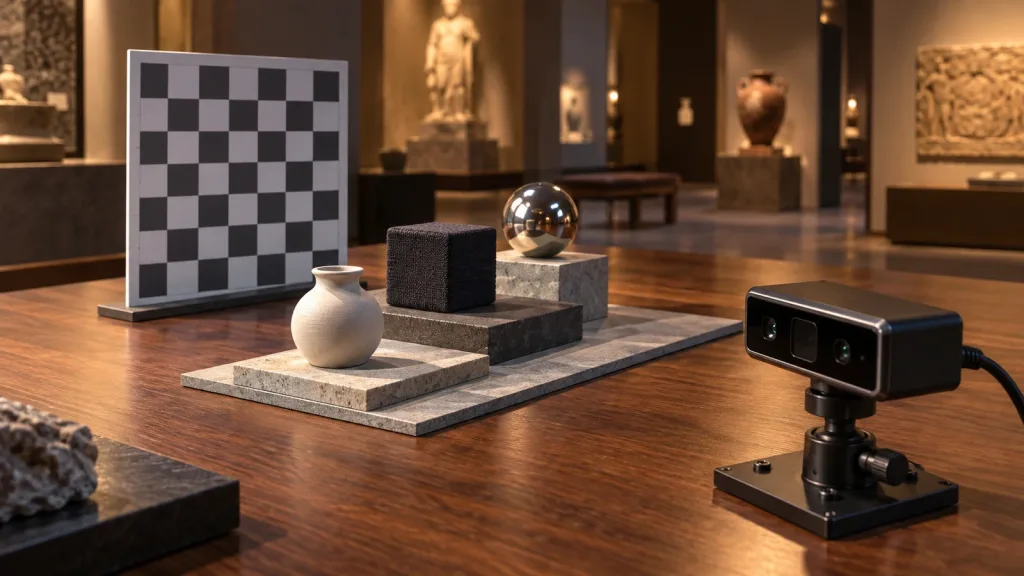
| Scene realism | The sensor is tested on the actual target materials, angles, and working distances used in the pilot. | All proof comes from a clean tabletop or one ideal indoor target. |
| Depth behavior | Small scene changes produce stable, explainable measurement changes in logs or host output. | The team can quote range but cannot explain depth behavior on real targets. |
| Mounting stability | Bracket placement, cable routing, and platform vibration do not create intermittent data or obvious measurement instability. | The module works when hand-held but becomes unreliable after mounting. |
| Integration path | The chosen UART, UVC, or UDP path supports repeatable capture, replay, and debugging. | The demo runs once, but no one can inspect the data path after a failure. |
| Role clarity | The module's job in the final system is explicit: altitude support, obstacle sensing, robotics perception, or inspection. | The buyer is still mixing survey payload expectations with compact near-range perception roles. |
| Safety label understanding | The team uses the Class 1 label correctly as a laser-safety input, not as a blanket proof of deployment readiness. | The safety class is being treated as evidence of ruggedness, accuracy, or environmental qualification. |
What the MRP-LD1 Facts Mean in Practice
The current Featured product is the LiDAR Drone Module – MRP-LD1 Solid-State dToF Sensor. Purpleriver's export lists it as a solid-state SPAD dToF module with 940 nm VCSEL, Class 1 FDA-recognized eye safety, indoor 0.5 m to 25 m range, outdoor 0.2 m to 8 m range, 80Klux ambient-light resistance, 40 × 30 output at 10 fps, 60° × 45° field of view, and UART/UVC/UDP interfaces.
| Exact exported fact | What a buyer should infer |
|---|---|
| Solid-state SPAD dToF architecture | Use it to screen for compactness, response style, and intended near-range perception role rather than assuming survey-grade behavior. |
| Indoor 0.5 m to 25 m; outdoor 0.2 m to 8 m | Separate indoor acceptance from daylight deployment approval; the same scene proof is not interchangeable. |
| 60° × 45° FoV | Check whether the visible scene footprint matches your bumper, mast, drone belly, or inspection mount geometry. |
| 40 × 30 output at 10 fps | Judge whether the spatial detail and update rate are enough for your exact pilot task rather than just reading the headline. |
| UART / UVC / UDP | Pick the interface that gives your program the cleanest debug and replay path before field deployment. |
| 5 V, 1.2 W, 8 g | These are favorable integration inputs for compact platforms, but they still do not replace a mounted-system trial. |
| Class 1 (FDA Recognized Eye-Safe) | Use it as a laser-product safety input only. It does not prove vibration tolerance, scene stability, or deployment quality. |
Validation Workflow Before Pilot Deployment
1. Define the exact system role
Start by deciding what the module is expected to do. Is it supporting a UAV altitude or obstacle workflow, an AMR perception path, or an inspection station? If the role is unclear, the industrial-grade label is meaningless. ArduPilot and PX4 both document concrete rangefinder roles, which is a good reminder that a compact LiDAR should be validated against one real control or perception function, not against a vague idea of ruggedness.
2. Test on the real scene, not the cleanest scene
Use the materials, geometry, and lighting your pilot will actually encounter. Mixed matte and reflective surfaces, partial occlusions, angled brackets, concrete edges, pallet wraps, and outdoor daylight all reveal more about deployment readiness than a flat lab wall does. This is where the NIST depth-resolution framing becomes practical: the point is to see whether small but meaningful scene differences are measured in a stable way.
3. Mount it before you trust it
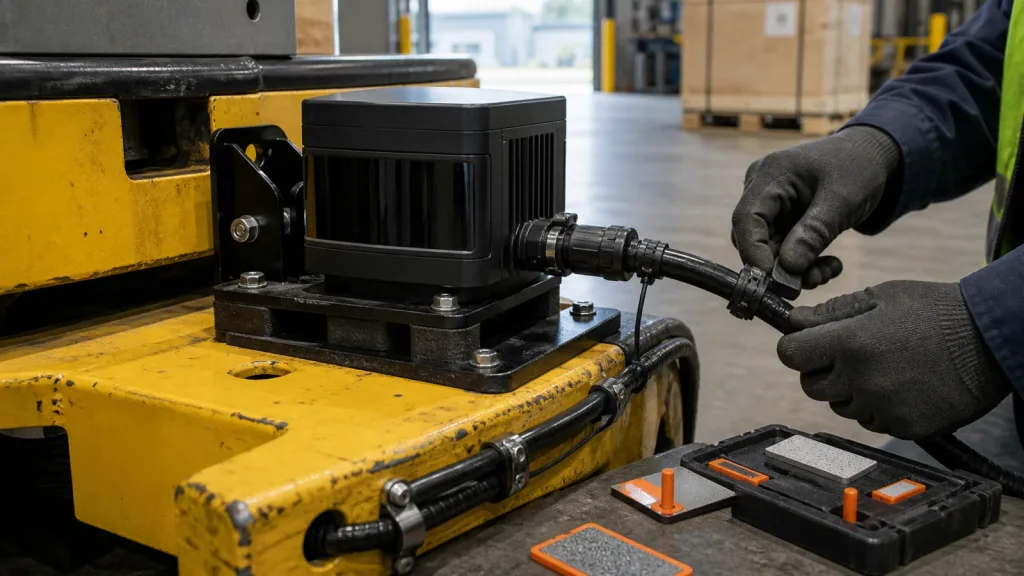
A compact LiDAR can look excellent on a bench and fail after mounting because cable strain, bracket resonance, or a bad field of view makes the output unstable. Industrial readiness has to include the mounted state, not just the loose module. That means the team should inspect cable routing, connector retention, and any mechanical features that can change the usable view or create intermittent behavior.
4. Prove the interface path under load
If your program cannot capture, replay, and troubleshoot the data path, it is not ready for deployment. Use the path that gives you the clearest post-test evidence. For some teams that will be a simple UART integration; for others it will be UVC or UDP because they need richer host-side inspection. The correct choice is the one that leaves the fewest unknowns after a failed pilot.
5. Keep the safety label in scope
The FDA's laser-products guidance is useful for interpreting a Class 1 label, but buyers should keep that label in its proper lane. It helps you discuss laser-product safety classification. It does not certify industrial durability, control quality, or integration readiness.
Interface, Mounting, and Handoff Checks
Compact modules often fail buyer evaluations because the team jumps from bench signal to field deployment without proving the installation details. Before you approve the module, verify the three layers below.
- Mechanical layer: bracket stiffness, cable strain relief, connector retention, and whether the mounted view is still aligned to the target scene.
- Data layer: whether UART, UVC, or UDP gives you the cleanest path for capture and replay.
- System layer: whether the host software or controller actually consumes the sensor output in the role you planned.
Current PX4 rangefinder guidance is explicit that distance sensors support terrain following, terrain holding, collision prevention, and landing-related behavior. ArduPilot's rangefinder setup overview similarly distinguishes orientation and role. Those current docs matter because they keep the integration conversation grounded. Buyers should request proof that the module works in the intended system role, not just proof that the sensor streams numbers.
If the supplier or integration team cannot explain the installed data path, use the program's next review meeting to pause the purchase. That is a cheaper decision than discovering the blind spot later during a mobile-platform or flight trial.
Example Case: Compact Module on a Mobile Platform Pilot
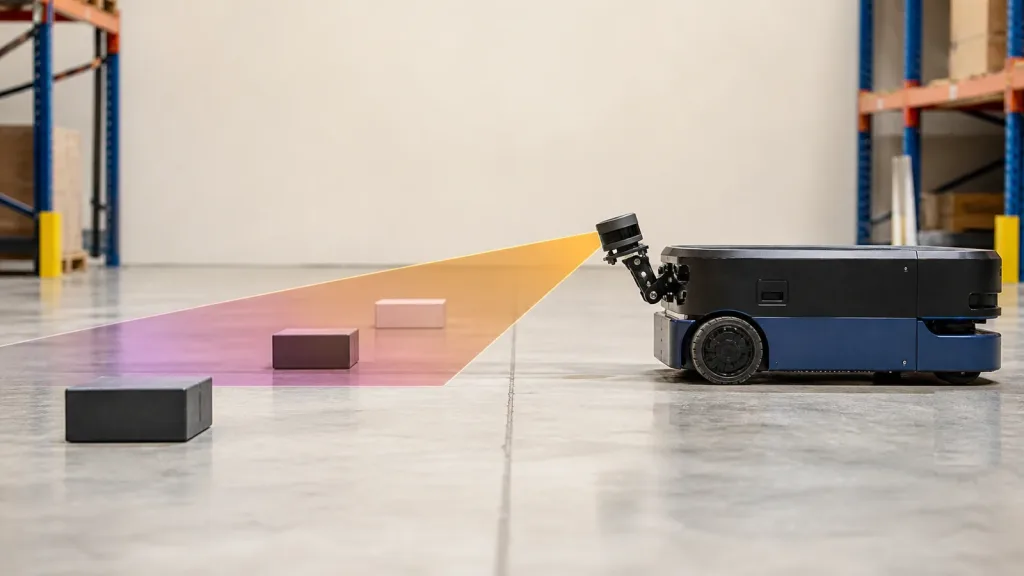
Consider a small autonomous platform that needs a front-mounted perception module for low-speed obstacle awareness in a warehouse shipping bay. The buyer is not asking for a survey payload. The buyer needs a compact sensor that can be mounted on a bumper bracket, survive normal cable handling, and produce stable data on pallet corners, shrink wrap, floor joints, and mixed ambient light near an open loading door.
In that case, the industrial-grade decision should answer four questions:
- Does the mounted module still see the target geometry once the bracket and cable routing are final?
- Does the data stay stable when the platform is moving and vibrating at pilot speed?
- Can the team replay what happened when the scene changed from matte to reflective surfaces?
- Can the integrator explain the exact software or controller role the sensor output feeds?
If the answer to any of those is still vague, the module is not industrial grade for that program yet, regardless of how clean the standalone demo looked.
Common Mistakes
- Treating "industrial grade" as a synonym for "compact and expensive."
- Approving the module without testing it on the real materials and angles used in the pilot.
- Using a safety label as proof of deployment readiness.
- Skipping the mounted-state test and trusting only a loose bench setup.
- Ignoring how the host system will actually consume the data.
- Requesting a sample before defining what success looks like in the final application.
RFQ and Evaluation Checklist
| Checklist item | What to confirm |
|---|---|
| Role definition | The sensor's job in the final system is explicit and measurable. |
| Scene proof | The test scene includes the real materials, distances, and lighting used in the pilot. |
| Mounted-state proof | The module is validated on its real bracket with final cable routing. |
| Depth behavior evidence | The team can explain how small scene changes appear in the output. |
| Interface path | The chosen interface supports repeatable logging and troubleshooting. |
| Safety scope | The laser-safety label is understood correctly and not stretched into unrelated claims. |
| Pilot-readiness gate | Approval requires evidence from the installed system, not just the sensor module alone. |
Need a Compact LiDAR Module for an Industrial Pilot?
Start with exact product facts, then demand proof from the installed system. Review the MRP-LD1 product page, compare the module against your real deployment scene, and use Purpleriver's documentation resources before you call the setup pilot-ready.